

Chlorophyll-A Monitoring
Follow changes in chlorophyll-A to support algae-bloom awareness and water-intake operating decisions.
Use chlorophyll-A as an indicator, not a species identification
Chlorophyll-A monitoring provides information about an algal pigment in a sampled water stream. A rising trend can help operators recognise a change in algal loading and decide when further investigation or a review of intake treatment is needed.
The CF-200 is a continuous fluorescence monitor for freshwater and seawater applications. PMA can review its use at water intakes and desalination or treatment systems. Chlorophyll-A is an indicator: it does not by itself identify an algal species, confirm a harmful bloom or measure a specific toxin.
Explore the relevant products
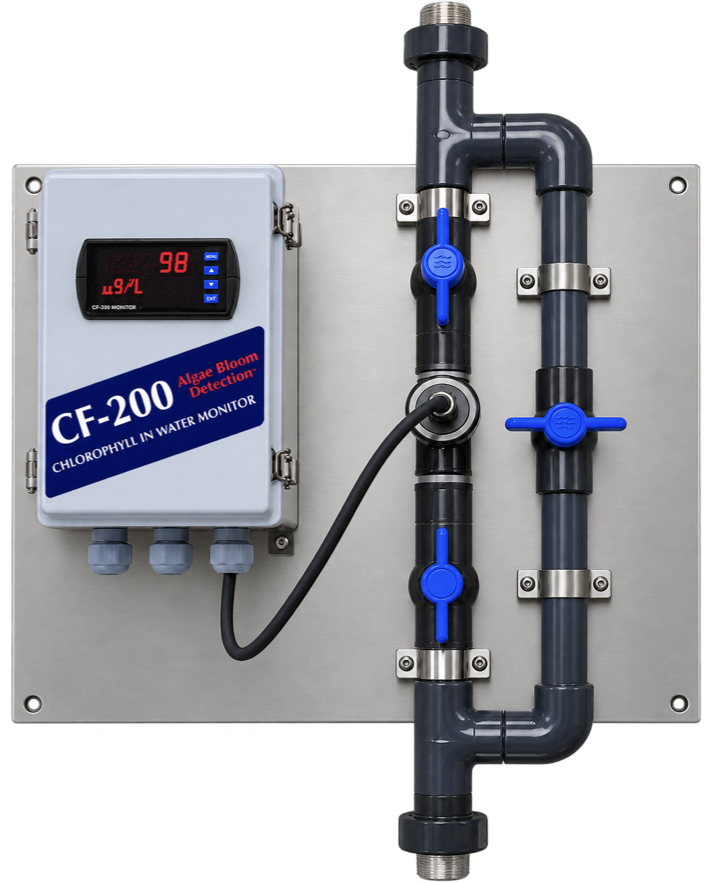
CF-200 algae-bloom monitor
Continuous chlorophyll-A monitoring with a display and plant signal output. Review the installation and required measurement range with PMA.
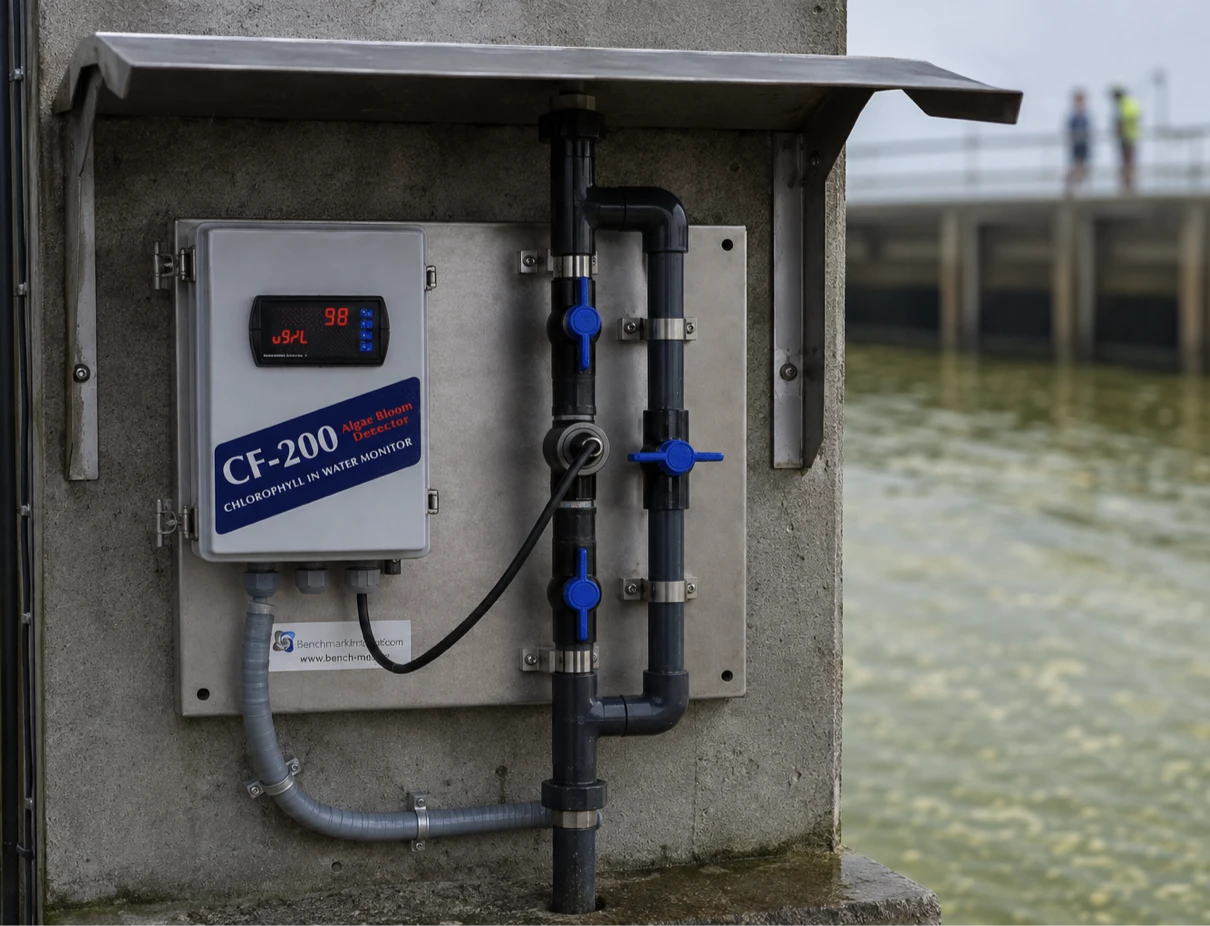
Intake monitoring and maintenance
A bypass arrangement can provide access for routine checks and cleaning. Plan a representative sample supply and a practical maintenance location.
Turn the chlorophyll trend into useful intake information
Choose a representative sample
Locate the monitoring point around the operational decision: incoming water conditions or a treatment-stage check. Consider sample transport and whether the sampled stream reflects the intake conditions operators need to understand.
Establish a local baseline
Interpret measurements alongside seasonal conditions and other site water-quality information. A useful operating threshold depends on the intake and treatment process; there is no single chlorophyll concentration that defines a harmful bloom everywhere.
Plan verification and response
Agree how a change will be reviewed and when additional sampling is required. Species identification or toxin testing requires appropriate separate methods. Include cleaning and inspection in the monitoring routine so an instrument trend remains useful.
Frequently asked questions
Can the CF-200 monitor both freshwater and seawater?
Yes, the CF-200 is offered for chlorophyll-A monitoring in freshwater and seawater applications. PMA should review the particular sample conditions, installation materials and required measurement range before specification.
Does chlorophyll-A measurement detect harmful algal toxins?
No. Chlorophyll-A monitoring is not a direct toxin test and does not establish species identity. A changing trend can prompt further investigation, with specialist sampling and analysis where those answers are needed.
How can monitoring help an intake or desalination plant?
A continuous trend can help operators recognise changing algal loading and review pretreatment operation. The appropriate response depends on the plant and should be defined in its operating procedures rather than assumed from the measurement alone.
Can the CF-200 also measure oil contamination?
It is the chlorophyll-A instrument in this range. Oil and hydrocarbon monitoring uses a different measurement configuration, such as the TD-120. If both risks matter at an intake, discuss the separate monitoring requirements with PMA.
Related monitoring options
CF-200 product details
Review the instrument and installation details for continuous chlorophyll-A measurement.
Online Oil-in-Water Monitors
Follow hydrocarbon changes continuously, support process alarms and investigate contamination between routine grab samples.
Monitoring applications
Explore the process decisions supported by the product range.
Measurement targets
Review oil, hydrocarbon and chlorophyll-A requirements.
Discuss your application with PMA
Tell us whether the intake is freshwater or seawater, the expected chlorophyll range and the treatment decision the reading will support. PMA can review the CF-200 installation and signal requirements.