
A chlorophyll-a sensor detects fluorescence associated with chlorophyll in algae and cyanobacteria. It can provide a quick measurement for comparing samples, locations or readings over time. The result is best understood as a pigment signal whose meaning depends on the instrument, sample and monitoring objective.
How does a chlorophyll sensor work?
In an in-vivo measurement, the instrument shines excitation light into an untreated water sample or waterbody. Chlorophyll in the cells responds with fluorescence, which the instrument detects and reports as a signal. Some instruments can convert that signal to an estimated concentration using a calibration or conversion factor.
The conversion is not automatically equivalent to a laboratory measurement. Turner Designs’ in-vivo chlorophyll guidance describes in-vivo fluorescence as useful for following spatial and temporal patterns, while noting that environmental conditions, interfering compounds, cell physiology and light history can affect the relationship between fluorescence and actual chlorophyll concentration.
When is a chlorophyll sensor useful?
Repeated readings can help establish a site baseline, compare locations, follow seasonal changes or identify a signal that merits closer investigation. A handheld fluorometer can suit discrete field checks; a submersible arrangement may suit repeated or in-situ measurements if the instrument is designed and configured for that deployment.
The best choice depends on the monitoring question. A broad algal trend may call for a chlorophyll channel. A study focused on freshwater cyanobacteria may also need a phycocyanin measurement and other evidence. A chlorophyll reading alone does not identify species or establish whether cyanotoxins are present.
How should readings be interpreted?
Use the current manual for the exact instrument, channel, calibration checks, operating limits and reporting units. Keep the measurement location, depth, time and water conditions with each result. If the purpose is to report concentration, rather than relative change, compare readings with a suitable laboratory method using samples from the site.
Look for patterns in a consistent series rather than treating one number as a universal threshold. If a reading changes unexpectedly, repeat the measurement using the method’s quality-control procedure and consider a paired sample or a different analytical method.
Sources: US EPA: chlorophyll-a indicator; Turner Designs: in-vivo chlorophyll concepts and concerns; Turner Designs: cyanobacteria parameter.
For the wider monitoring plan, read our freshwater algae and cyanobacteria monitoring guide.
Discuss your monitoring application
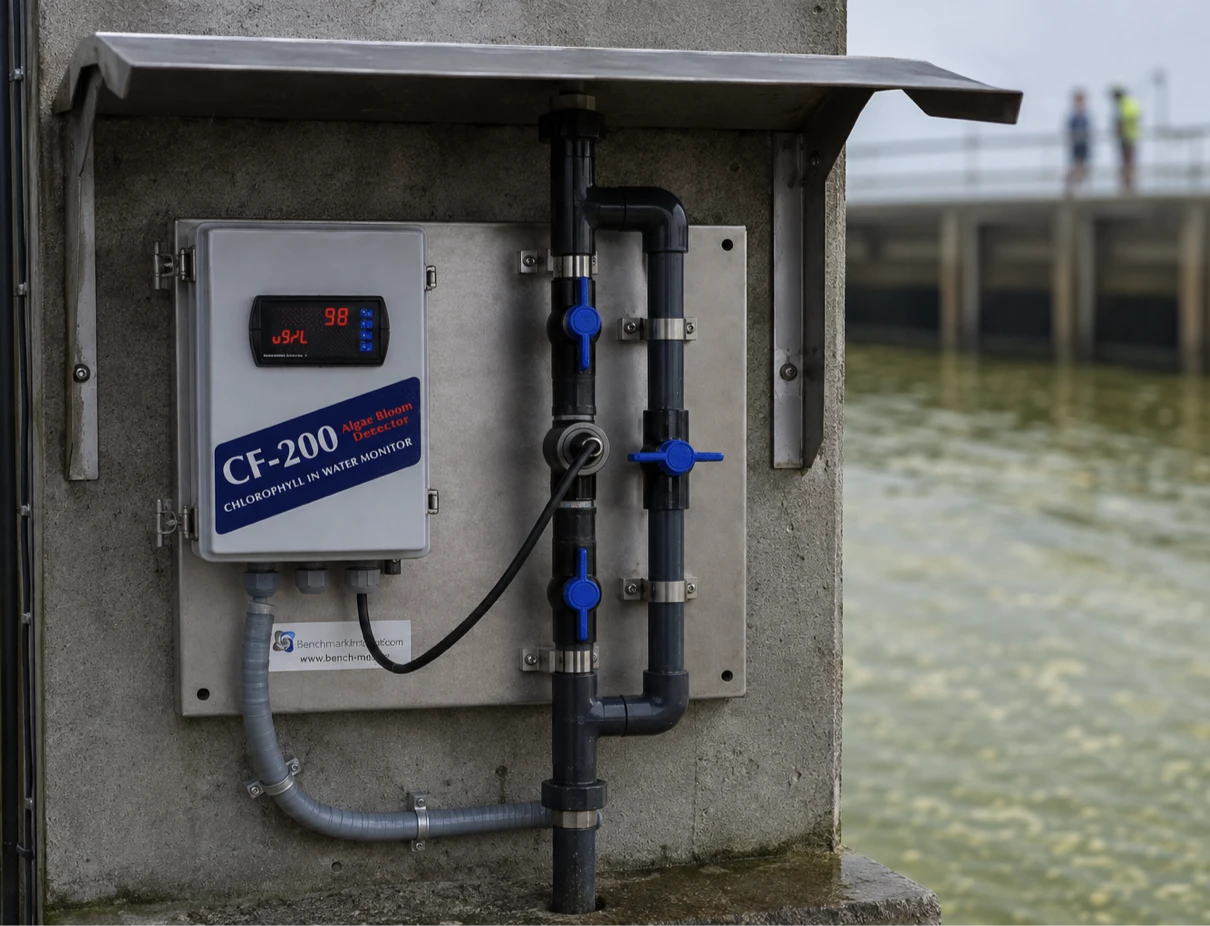
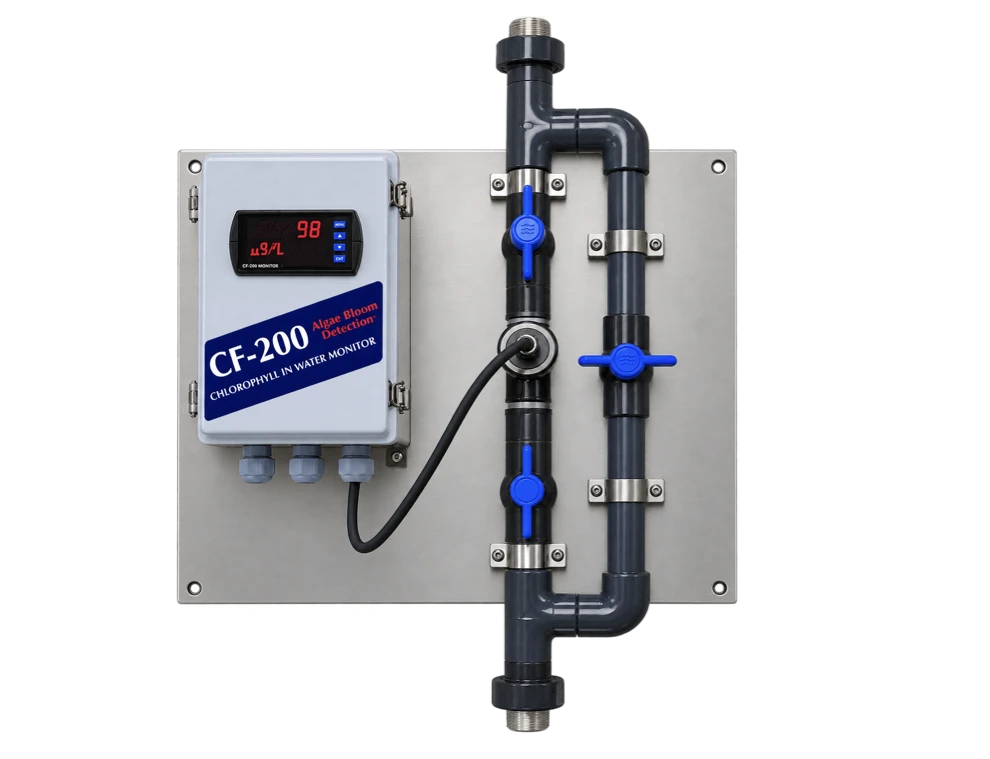
Explore PMA’s chlorophyll-A monitoring information and CF-200 continuous chlorophyll monitor, or contact the application team to discuss the measurement channel, sample conditions and validation your project needs. A chlorophyll channel is not a substitute for phycocyanin or toxin analysis.