
A freshwater monitoring programme works best when it starts with the decision the data must support. A lake survey, source-water trend, research study and investigation of a suspected bloom can need different measurements and sampling schedules. No single sensor reading describes every organism, location or potential health risk.
What can a pigment measurement tell you?
Chlorophyll-a is a pigment used by algae and cyanobacteria. Its concentration or fluorescence response can help show changes in photosynthetic biomass across a waterbody. It is a useful indicator, but a chlorophyll reading is not an organism identification or a direct cell count.
For many freshwater cyanobacteria, phycocyanin is a more relevant pigment channel. Comparing chlorophyll and phycocyanin signals can add context about a change in the algal community. Turner Designs’ cyanobacteria guidance notes that chlorophyll fluorescence alone cannot accurately determine cyanobacterial presence. Neither pigment is a direct test for cyanotoxins.
Match the method to the question
A practical monitoring plan may combine:
- Visual observations and field notes to record the appearance and location of a change.
- In-vivo fluorescence to follow pigment signals quickly in untreated water.
- Laboratory pigment analysis, microscopy or cell counts when the study needs those results.
- Separate toxin analysis when the question concerns cyanotoxins.
These methods answer different questions. Choose them before collecting samples so that the collection, preservation, analysis and reporting procedures fit the intended result. The US EPA chlorophyll-a indicator guidance describes distinct monitoring and sampling approaches for different waterbodies and applications; its methods page is a technical reference, not UK regulatory advice.
Build a site-specific baseline
Select repeatable monitoring locations that reflect the purpose of the programme. Record the time, depth, position, instrument channel, calibration or check procedure, water conditions and any visible observations. Use a consistent approach when comparing readings, and note when the approach changes.
A baseline helps distinguish a meaningful change from ordinary variation at that site. If a fluorescence reading will be reported as a concentration rather than a relative signal, collect paired samples and establish an appropriate relationship for the instrument, water matrix and method.
Decide what happens after a change
Set out who reviews results, what prompts an additional sample, and which confirmatory method is used if organism identification or toxin status matters. For a suspected bloom or a drinking-water concern, follow the responsible authority’s procedures. A pigment sensor can contribute an early signal or a trend; it cannot make a public-health or compliance decision on its own.
This guide is the starting point for the series. The companion pages cover chlorophyll-a sensors, phycocyanin, pigment comparisons, bloom monitoring, source water, laboratory analysis, sampling approaches and instrument selection.
Sources: Turner Designs: cyanobacteria parameter; US EPA: HAB methods; US EPA: chlorophyll-a indicator.
Discuss your monitoring application
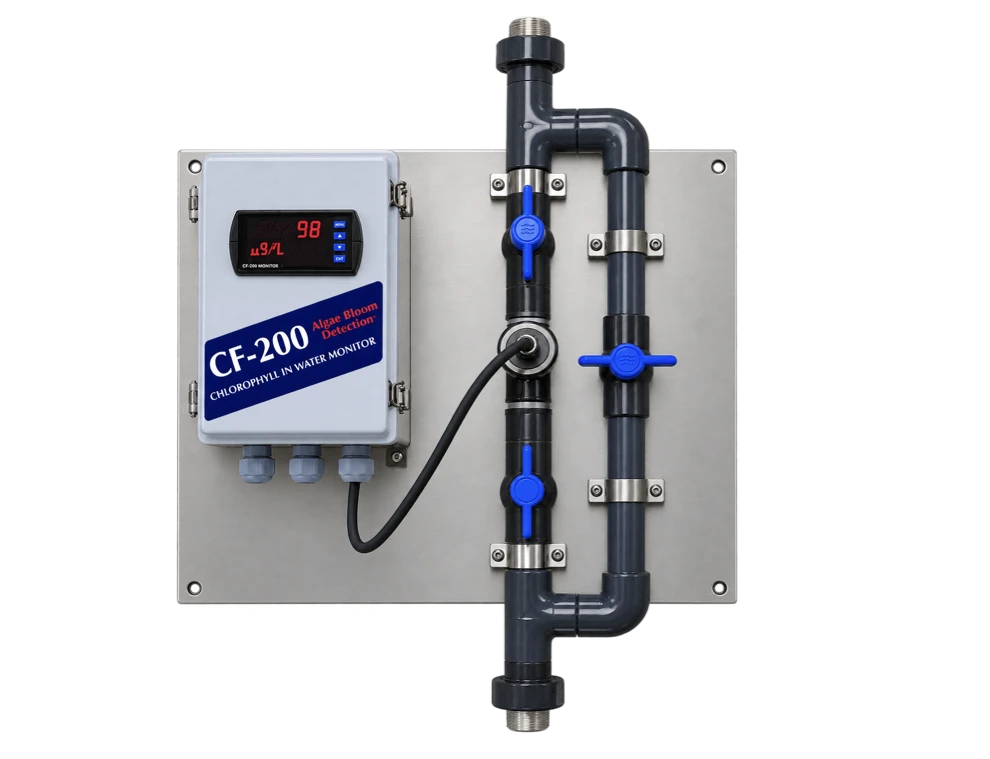
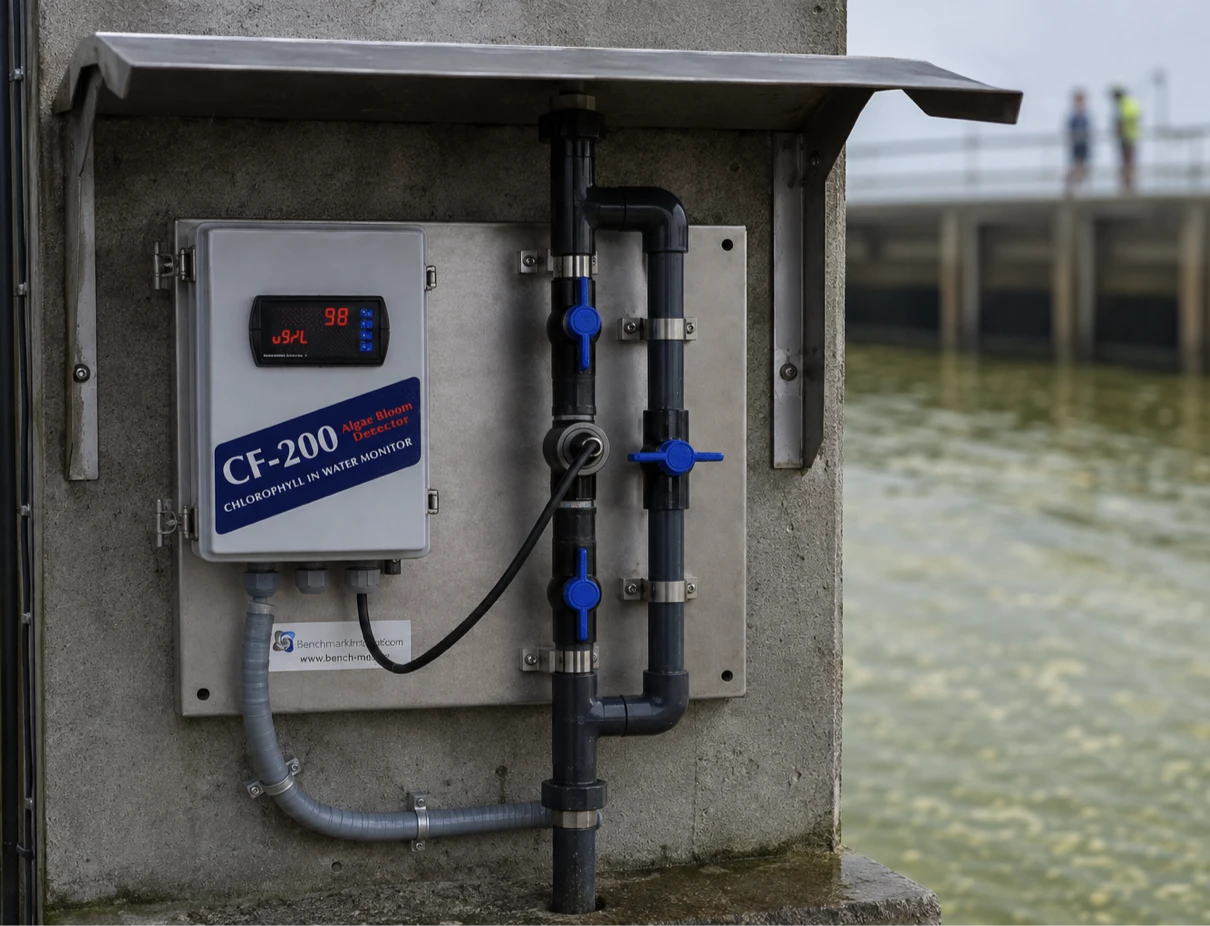
Explore PMA’s chlorophyll-A monitoring information and CF-200 continuous chlorophyll monitor, or contact the application team to discuss the measurement channel, sample conditions and validation your project needs. A chlorophyll channel is not a substitute for phycocyanin or toxin analysis.