
EPA Method 1664A and UV fluorescence can both be discussed in oil-in-water work, but they measure different properties. EPA 1664A is a defined extraction and gravimetric procedure. UV fluorescence is an optical technique that responds to fluorescent components and a selected calibration.
What EPA Method 1664A measures
EPA Method 1664A determines hexane extractable material and, where required, silica-gel-treated hexane extractable material in water and wastewater. The method includes defined sample collection, acidification, extraction, solvent handling, gravimetric determination and quality control.
Method scope and requirements should be checked in the current US EPA Clean Water Act methods material and the laboratory quality system.
What UV fluorescence measures
UV fluorescence measures light emitted by fluorescent aromatic components after ultraviolet excitation. The signal is converted to an oil-equivalent concentration using a target-oil or surrogate calibration.
Why results may differ
- The gravimetric extract can contain material that does not fluoresce strongly.
- Fluorescence may respond strongly to a small aromatic fraction.
- Extraction solvents, sample preservation and handling differ.
- Oil type, weathering and treatment can change the relationship.
- The methods may have different reporting limits and quality-control requirements.
Operational screening and process control
Fluorescence can provide rapid results for screening, treatment profiling and online trending. A formal compliance result should use the method required by the permit. An operational analyser does not replace EPA 1664A merely because both outputs use mg/L.
Developing a site-specific correlation
Collect representative paired samples over the expected operating range. Analyse them by the written fluorescence procedure and the reference laboratory method, then assess bias, precision and changes with oil type or matrix. Do not rely on a universal conversion factor.
Choosing portable or continuous measurement
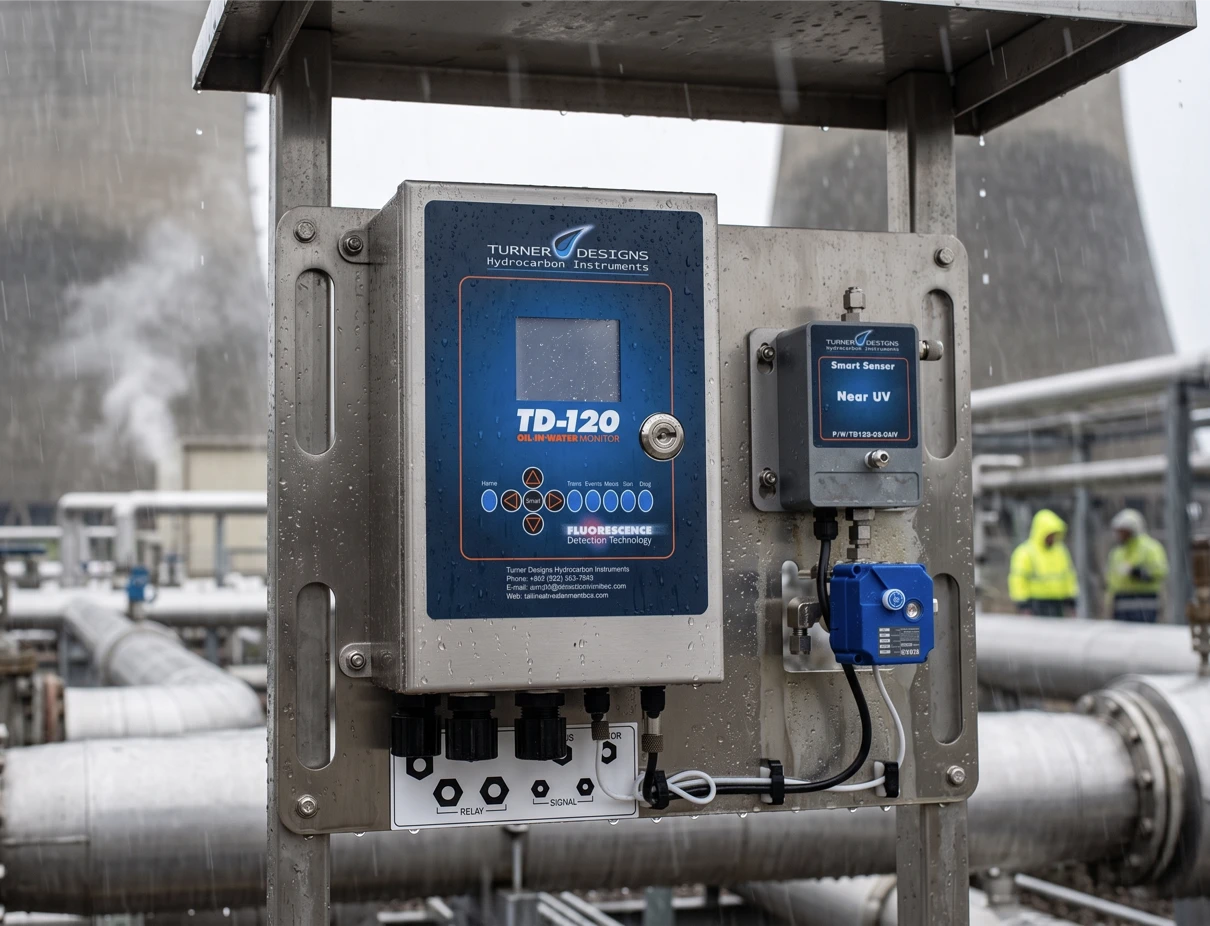
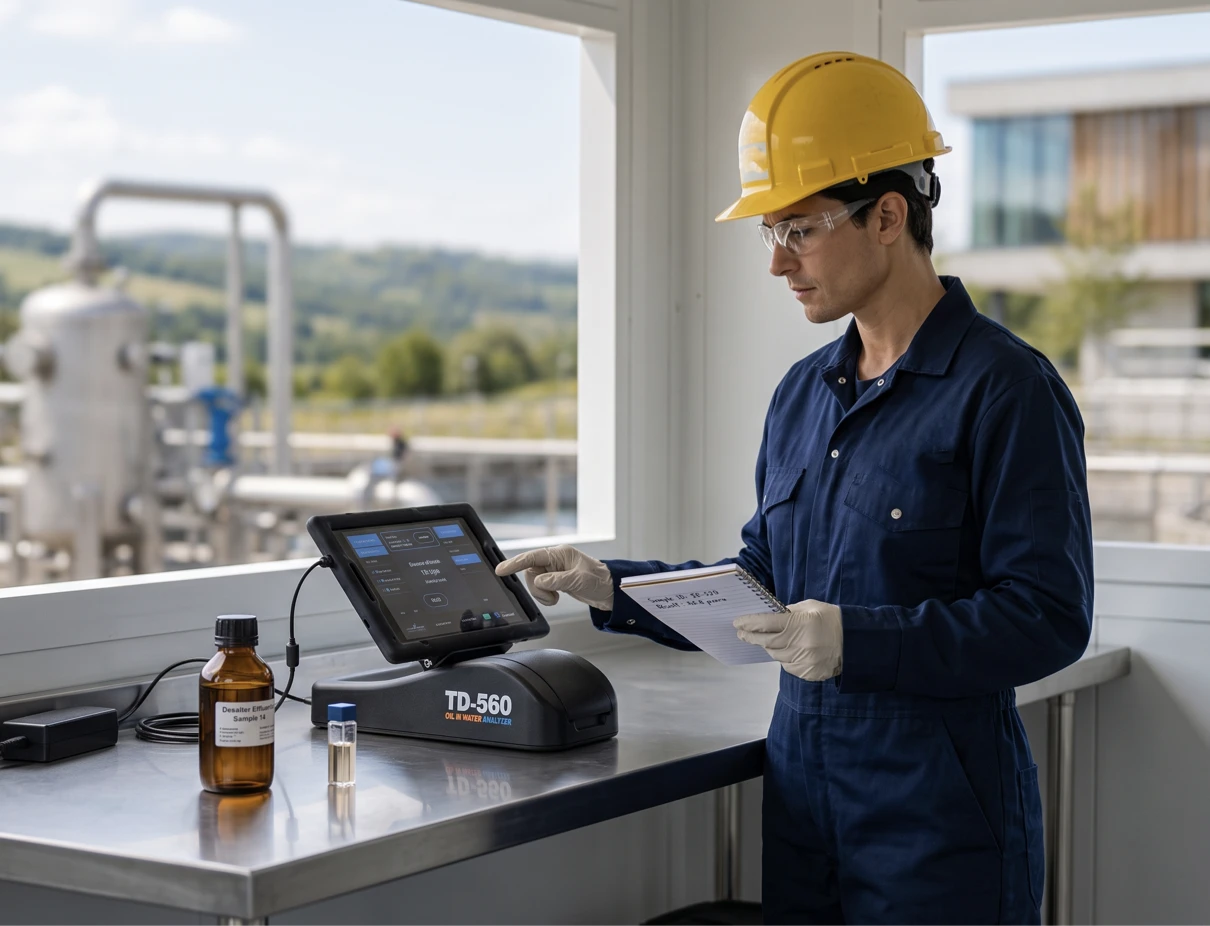
Portable TD-550 and TD-560 analysers support discrete samples. The TD-120 online monitor supports continuous operational trending from a fixed sidestream.
Review the method relationship
Contact PMA with the target oil, sample matrix, expected range and laboratory method. PMA can review the instrumentation requirement, while the responsible laboratory or regulator defines formal method compliance.