

UV fluorescence, infrared absorption and gravimetric analysis are all used for oil-related measurements, but they do not measure exactly the same property. A useful comparison starts with method definition, sample preparation and intended use.
UV fluorescence
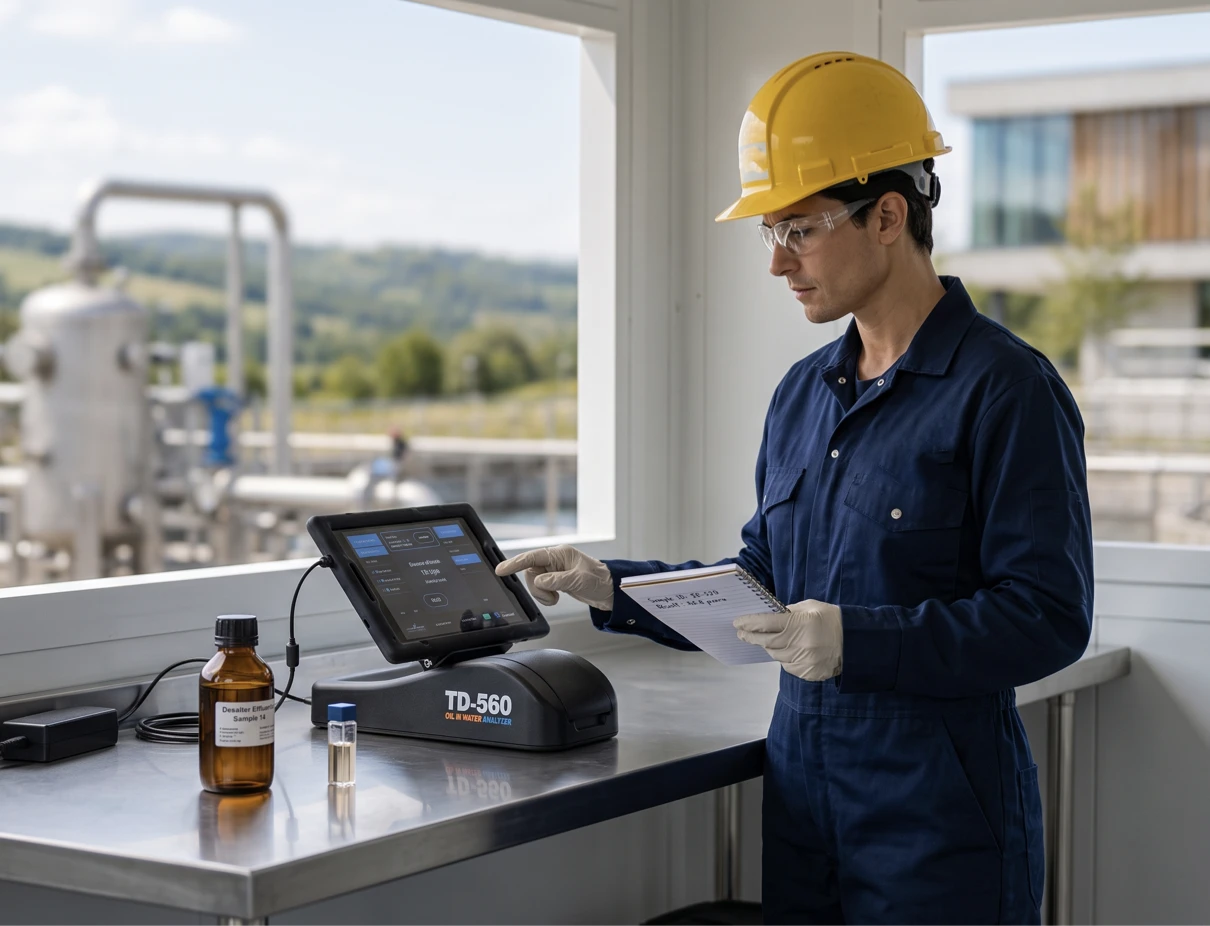
UV fluorescence excites aromatic hydrocarbon components and measures emitted light. It can provide sensitive, rapid results and is suitable for portable analysis or continuous trending. Response depends on the fluorescent composition of the target oil and the selected calibration.
Infrared analysis
Infrared methods measure characteristic hydrocarbon absorption, commonly after solvent extraction. They can respond to a broader hydrocarbon fraction than fluorescence, but performance depends on the specified wavelength, solvent and extraction procedure.
Gravimetric analysis
Gravimetric methods extract material from the sample and determine the residue mass after solvent removal. The result can include non-hydrocarbon material that is extractable under the method. Gravimetry provides a mass-based result but is slower and generally laboratory-based.
The methods are complementary
- Fluorescence is well suited to sensitive screening, trending and rapid operational decisions.
- Infrared methods can provide an extracted optical measurement of hydrocarbon bonds.
- Gravimetric methods provide a defined extractable mass under a written procedure.
- Chromatography may be added when a defined hydrocarbon range or composition is required.
A site may use an online or portable optical measurement for routine control and a laboratory reference method for periodic comparison. The relationship must be established with paired, representative samples.
Avoid universal conversion factors
A conversion developed for one oil and water matrix should not be assumed to apply to another. Weathering, treatment, aromatic content and sample preparation can change the relationship between fluorescence and a reference method.
Which method should you choose?
Choose according to the required decision. Formal reporting should use the method required by the permit or quality system. Process control may prioritise speed, repeatability and sensitivity to change. Read how to measure oil in water for the wider selection process.
Discuss method correlation with PMA
Contact PMA with the required reference method, target hydrocarbon, sample matrix and operating range to review a suitable correlation or monitoring approach.